Destination Uganda - The Pearl of Africa


We are specialists in Uganda, dedicated to assisting you in discovering this unique and important country situated in the center of Africa. With our committed team and a strong network of our partners, we will help you plan a trip that meets your goals, budget, and desire for your holiday adventure. Uganda, is a landlocked country located in East Africa, bordered by South Sudan in the north, Kenya in the east, Tanzania and Rwanda in the south, and to the west of the Democratic Republic of the Congo.
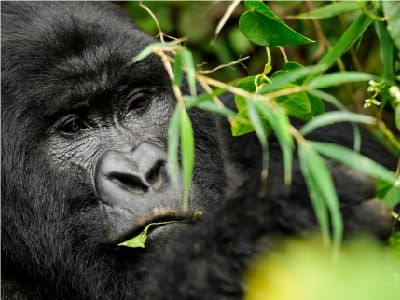
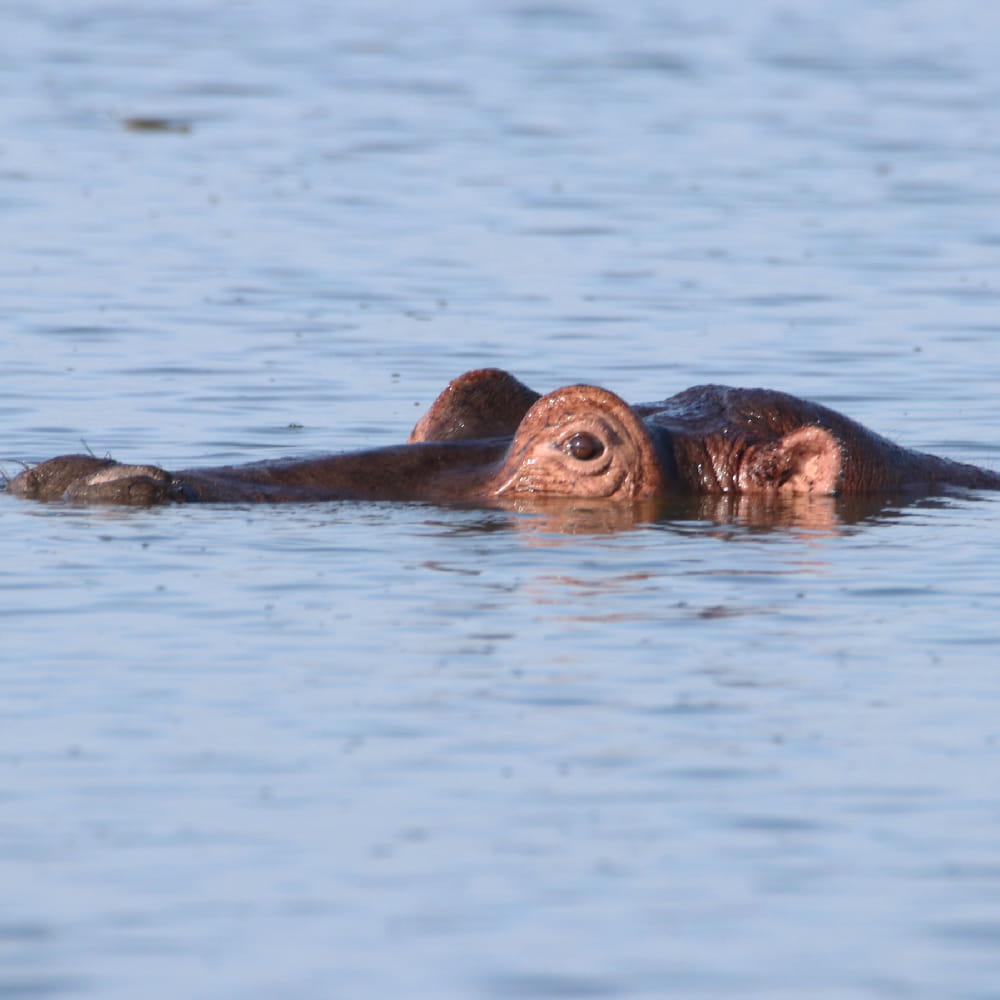
Uganda is famous for its diverse landscape, which includes the snow-capped Rwenzori Mountains and the expansive Lake Victoria. This nation boasts a rich variety of wildlife, featuring species such as chimpanzees and numerous rare birds. The secluded Bwindi Impenetrable National Park is renowned for being a sanctuary for mountain gorillas. In the northwest, Murchison Falls National Park is recognized for its remarkable 43-meter waterfall and a wide range of wildlife, including hippos.
Uganda is a prime natural tourist destination, boasting numerous national parks that are home to a diverse array of wildlife. From the time of its independence until the early 1970s, tourism played a significant role in the economy, ranking third in foreign exchange earnings after coffee and cotton. However, under President Amin's regime, tourism came to a halt, and the national parks fell into disrepair. Since the mid-1980s, there has been a gradual resurgence in tourism, accompanied by an increase in foreign investment in new hotel developments. Nevertheless, the tourist industry faced challenges due to political instability in neighboring regions during the 1990s, although it experienced a recovery in the early 21st century.
Relief
Most of Uganda is situated on a plateau, a large expanse that drops gently from about 5,000 feet (1,500 metres) in the south to approximately 3,000 feet (900 metres) in the north. The limits of Uganda’s plateau region are marked by mountains and valleys.To the west a natural boundary is composed of the Virunga (Mufumbiro) Mountains, the Ruwenzori Range, and the Western Rift Valley (see East African Rift System). The volcanic Virunga Mountains rise to 13,540 feet (4,125 metres) at Mount Muhavura and include Mount Sabinio (11,959 feet [3,645 metres]), where the borders of Uganda, the Democratic Republic of the Congo, and Rwanda meet. Farther north the Ruwenzori Range—popularly believed to be Ptolemy’s Mountains of the Moon rises to 16,762 feet (5,109 metres) at Margherita Peak, Uganda’s highest point; its heights are often hidden by clouds, and its peaks are capped by snow and glaciers. Between the Virunga and Ruwenzori mountains lie Lakes Edward and George. The rest of the boundary is composed of the Western Rift Valley, which contains Lake Albert and the Albert Nile River.
The northeastern border of the plateau is defined by a string of volcanic mountains that include Mounts Morungole, Moroto, and Kadam, all of which exceed 9,000 feet (2,750 metres) in elevation. The southernmost mountain—Mount Elgon—is also the highest of the chain, reaching 14,178 feet (4,321 metres). South and west of these mountains is an eastern extension of the Rift Valley, as well as Lake Victoria. To the north the plateau is marked on the South Sudanese border by the Imatong Mountains, with an elevation of about 6,000 feet (1,800 metres).
Drainage
Lake Victoria, located in southeastern Uganda, spans an area of 26,828 square miles (69,484 square kilometers), making it the second largest inland freshwater lake in the world by surface area, following Lake Superior in North America. However, in terms of volume and depth, Lake Baikal in Siberia surpasses it. Lake Victoria is also a significant source of the Nile River. In addition to Lake Victoria, Uganda is home to five other prominent lakes: Edward and George in the southwest, Albert in the west, Kyoga in central Uganda, and Bisina in the east. The country also features eight major rivers, including the Victoria Nile in central Uganda, the Achwa, Okok, and Pager in the north, the Albert Nile in the northwest, and the Kafu, Katonga, and Mpongo in the west.The rivers originating in the southern region converge into Lake Victoria, from which water flows out through Owen Falls near Jinja, creating the Victoria Nile. This river travels northward, passing through the eastern part of Lake Kyoga, before veering west and north to cascade over Karuma Falls and Murchison Falls, ultimately draining into Lake Albert.
Lake Albert is subsequently drained to the north by the Albert Nile, which is referred to as the Al-Jabal River, or Mountain Nile, once it crosses into South Sudan at Nimule. Rivers that originate to the north of Lake Victoria feed into Lake Kyoga, while those from the southwest direct their waters into Lakes George and Edward.
In Uganda, the Nile River, apart from the Victoria and Albert Niles, is characterized by sluggish and often swampy conditions. Clear streams are predominantly found in mountainous areas and along the slopes of the Rift Valley. Most rivers are seasonal, flowing primarily during the wet season, and even the few perennial rivers experience fluctuations in their flow rates throughout the year.
Regarding soil quality, the general composition is fertile, primarily consisting of lateritic soils, with those surrounding Lake Victoria being among the most agriculturally productive globally. These fertile soils are interspersed with waterlogged clays typical of the northwest and the western banks of Lake Victoria.
Climate
Uganda experiences a tropical climate that is influenced by its elevation and the presence of lakes in certain areas. The predominant air currents are from the northeast and southwest. Due to Uganda's position near the equator, there is minimal variation in the sun's position at noon, resulting in nearly 12 hours of daylight throughout the year. These elements, along with relatively consistent cloud cover, contribute to a stable climate year-round.Most regions in Uganda receive sufficient rainfall, with annual totals varying from under 20 inches (500 mm) in the northeast to as much as 80 inches (2,000 mm) in the Sese Islands of Lake Victoria. In the southern part of the country, there are two rainy seasons, occurring from April to May and from October to November, interspersed with dry spells, although sporadic tropical thunderstorms may still arise. In the northern region, the wet season spans from April to October, followed by a dry season that extends from November to March.
Flora
In Uganda, vegetation is most abundant in the southern region, transitioning to wooded savanna, characterized by grassy parkland, in the central and northern areas. In less favorable conditions, the southern part features dry acacia woodlands, interspersed with occasional candelabra shrubs and euphorbia plants, along with patches of grassland. Similar vegetation types are present in the floors of the Rift Valley. The northeastern region, marked by steppes and thickets, represents the driest areas of the country. In the vicinity of Lake Victoria and the western highlands, human activities have led to the replacement of forests with elephant grass and remnants of woodland. The medium-elevation forests are home to a diverse array of species, while the high-elevation forests found on Mount Elgon and the Ruwenzori Range rise above 6,000 feet (1,800 meters). At their upper limits, these forests transition into mixed bamboo and tree heath zones, eventually leading to high mountain moorland. Uganda's extensive swamplands, covering 5,600 square miles (14,500 square kilometers), include both papyrus and seasonal grassy swamps.
Fauna
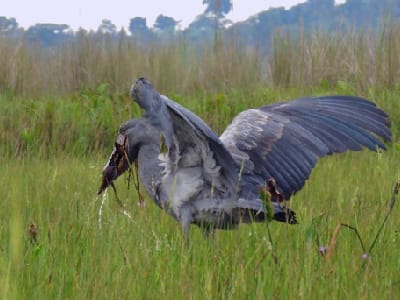
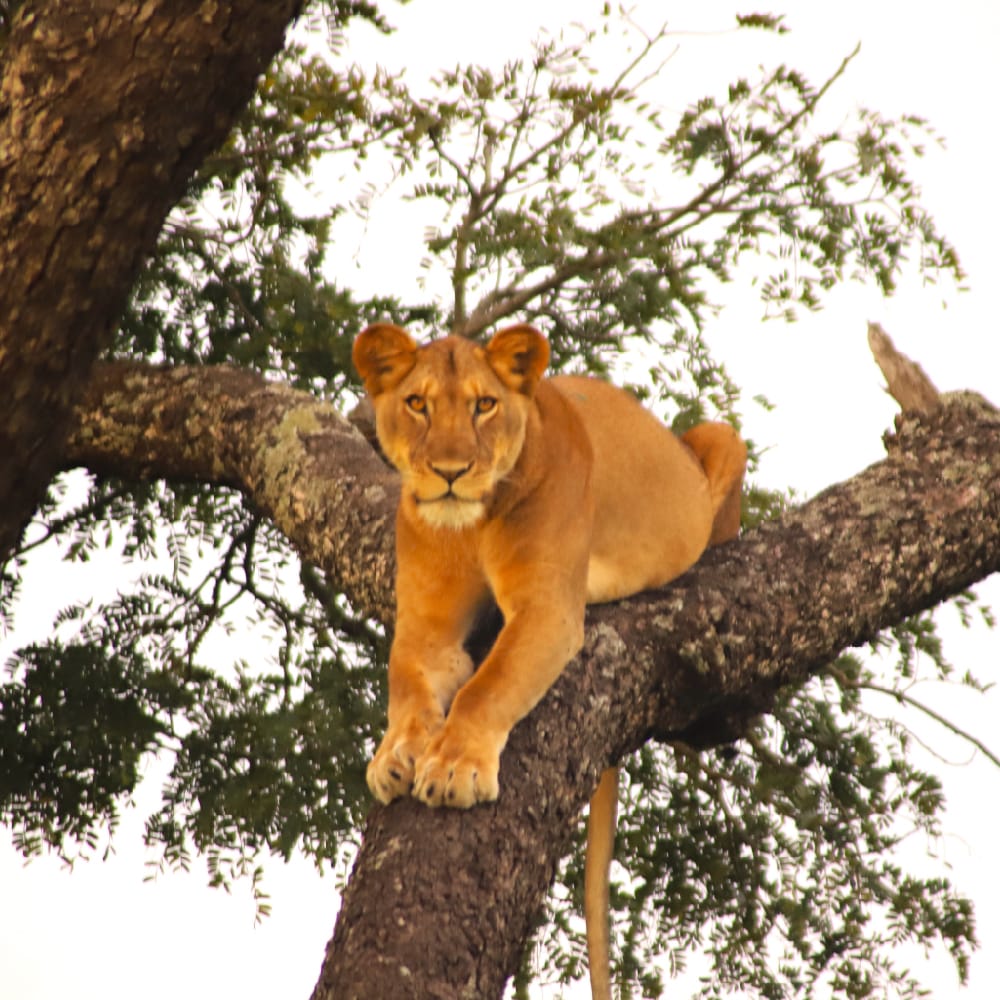
Lions and leopards primarily inhabit wildlife reserves and national parks, although they can occasionally be spotted outside these protected areas. Hippopotamuses and crocodiles are found in most lakes and rivers, with the exception of Lakes Edward and George, where crocodiles are absent. Mountain gorillas, chimpanzees, and small forest elephants are restricted to the far western regions. Elephants, buffalo, and the Uganda kob, a type of antelope, are predominantly located in the west and north, while black rhinoceroses and giraffes are found exclusively in the northern part of the country. The northeastern and southern grasslands are home to zebras, topis, elands, and roan antelopes, whereas other antelope species, such as oryx, greater and lesser kudu, and Grant’s gazelle, are unique to the northeastern region. Uganda boasts a rich diversity of bird species, including those that are endangered, with many national parks offering excellent opportunities for birdwatching. The country also features a variety of fish species, including ngege (a freshwater nest-building Tilapia), tiger fish, barbels, and Nile perch.Insects play a crucial role in the ecosystem. The female Anopheles mosquito, known for transmitting malaria, thrives at elevations below 5,000 feet (1,500 meters). Additionally, the presence of tsetse flies has restricted large areas of fertile grazing land for cattle. Uganda is also home to a diverse array of butterflies, including numerous endemic species.
Conservation status: A considerable portion of southern Uganda has experienced deforestation; however, a notable area of the country is protected within its ten national parks. Murchison Falls National Park, the largest in Uganda, spans 1,480 square miles (3,840 square kilometers) and is traversed by the Victoria Nile. Queen Elizabeth National Park, approximately half the size of Murchison Falls, is situated in the Lake Edward–Lake George basin. Bwindi Impenetrable Forest, recognized as a UNESCO World Heritage site in 1994, is home to nearly fifty percent of the global population of endangered mountain gorillas, while Mgahinga Gorilla National Park also shelters this rare species. Ruwenzori Mountains National Park, also designated a UNESCO World Heritage site in 1994, features the highest peak in the country, Margherita Peak. This region faced occupation by rebel forces during the late 1990s.
Capital: Kampala
Area: 241,038 sq km
Population: 45.8 million
Life expectancy: 61 years (men) 65 years (women)
Currency: Ugandan Shilling
Official languages: English, Swahili
Gross domestic product: 48.77 billion USD (2023) World Bank
Dialing code: +256
National Symbols: National Bird of Uganda, the Crested Crane (Gray-crowned Crane) is the national bird of the African Nation of Uganda. It appears on their flag and their coat of arms and can be found abundantly near the country’s many lakes and rivers that create fertile marshes rich.
Religion & Beliefs: Uganda is characterized by a diversity of religious beliefs and practices. The findings of the 2014 Census indicate that Catholics are the largest religious denomination constituting close to 40% of the population followed by Anglicans with 32%.
Geography
Uganda is located on the East African plateau, averaging about 1100 metres (3,250 ft) above sea level, and this slopes very steadily downwards to the Sudanese Plain to the north.Uganda, comparable in size to Great Britain, is home to numerous ethnic groups. The English language and Christianity serve as unifying factors among these diverse communities, particularly in the vibrant capital city of Kampala. This lush city features a layout that incorporates many small parks and public gardens, as well as a picturesque promenade along the banks of Lake Victoria, the largest freshwater lake in Africa. Additionally, the Swahili language connects Uganda with its East African neighbors, Kenya and Tanzania.
Sir Winston Churchill described Uganda as a fairy-tale, stating, “You ascend a railway instead of a beanstalk, and at the summit lies a magnificent new world.” During his visit to the country under British colonial rule, he referred to it as “the pearl of Africa.” Uganda is indeed home to diverse ecosystems, ranging from the towering volcanic mountains along its eastern and western borders to the lush, forested wetlands of the Albert Nile River and the rainforests on the central plateau. The land boasts rich fertility, and Ugandan coffee has emerged as a cornerstone of the agricultural sector, gaining popularity among enthusiasts globally.
Uganda achieved formal independence on October 9, 1962. The borders established in the late 19th century were drawn in a manner that was both artificial and arbitrary, encompassing two fundamentally distinct societal groups: the relatively centralized Bantu kingdoms in the south and the more decentralized Nilotic and Sudanic communities in the north. The nation’s troubling history of political strife, along with environmental challenges and the widespread impact of an AIDS epidemic, significantly impeded its development for many years. Nevertheless, at the dawn of the 21st century, Uganda was governed by a popularly elected civilian administration that had established political stability, set a precedent in addressing the AIDS crisis that threatened the continent, and boasted one of the fastest-growing economies in Africa.
Ethnic Groups
Uganda is home to a diverse array of ethnic groups, typically categorized into the "Nilotic North" and the "Bantu South." The Bantu-speaking population constitutes the majority of Uganda's inhabitants, with the Ganda being the largest single ethnic group, representing approximately one-sixth of the overall national population. Other Bantu-speaking communities include the Soga, Gwere, Gisu, Nyole, Samia, Toro, Nyoro, Kiga, Nkole, Amba, and Konjo. Additionally, a significant number of Rwanda (Banyarwanda) speakers, who had fled Rwanda during the late 1960s and early 1970s, resided in Uganda until the mid-1990s. Nilotic languages, which include Acholi (Acoli), Lango (Langi), Alur, Padhola, Kumam, Teso, Karimojong, Kakwa, and Sebei, are utilized by over ten percent of the population. Additionally, Central Sudanic groups, such as the Lendu, Lugbara, and Madi, are present in the northern region.During the period of British colonial governance, economic influence and educational opportunities were predominantly situated in the southern region of Uganda. Consequently, the Bantu people emerged as the primary group in modern Uganda, filling a majority of the high-ranking positions in academia, the judiciary, bureaucracy, and various religious and prestigious roles. In contrast, the British largely recruited individuals from the northern regions for military, police, and paramilitary services. This division resulted in a scenario where economic authority was held in the south, while military strength was concentrated in the north, significantly influencing the political landscape of postcolonial Uganda.
South Asians, including Indians, Pakistanis, and Bangladeshis, migrated to Uganda primarily during the 19th and 20th centuries, with their population exceeding 50,000 by 1969. Although they were offered Ugandan citizenship upon the country's independence, most chose to decline this opportunity. The community faced a severe decline when Idi Amin, who ruled from 1971 to 1979, mandated the expulsion of all noncitizen Asians in 1972, and later targeted even those who had Ugandan citizenship. Although the expulsion order for the latter group was eventually revoked, the majority opted to leave the country. By the end of that year, only a few Asians remained in Uganda. Amin seized the businesses and personal assets of the expelled Asian community, redistributing them to the remaining African populace. Initially, these actions garnered significant support from many Ugandans; however, the nation has since experienced a slow recovery from the economic fallout of these expulsions. In the early 1990s, the Ugandan government extended a formal invitation for the expelled Asian community to return, leading to the return of thousands, some of whom had their properties restored.
Religions
The religious landscape of Uganda is characterized by three main components: indigenous beliefs, Christianity, and Islam. Approximately 80% of the population identifies as Christian, with the majority being Roman Catholics and Protestants, including Anglicans, Pentecostals, Seventh-day Adventists, Baptists, and Presbyterians. Around 12.5% of the population adheres to Islam, while the remaining individuals primarily follow traditional religions. Similar to other regions in Africa, there is a blending of Islam and Christianity with indigenous practices, resulting in diverse syncretic religious expressions.
Economy
The economy of Uganda is predominantly agricultural, engaging approximately 80% of the workforce. The country's temperate climate is particularly favorable for the cultivation of crops and the rearing of livestock. Similar to many African nations, Uganda has faced significant challenges in achieving economic development and modernization, largely due to political instability. To address the economic damage caused by the regimes of Idi Amin and Milton Obote, the government sought to attract foreign investment in agriculture and key industries, primarily from Western nations and former Asian residents. The introduction of the 1991 Investment Code provided tax incentives and other benefits to both local and foreign investors, leading to the establishment of the Uganda Investment Authority, which streamlined the process for obtaining licenses and investment approvals. As a result, the economy experienced rapid growth during the 1990s and early 2000s, earning Uganda recognition for its economic stability and impressive growth rates. It stands out as one of the few African countries commended by the World Bank, the International Monetary Fund, and the global financial community for its effective economic policies, including government divestiture, privatization, and currency reform. Uganda has excelled in garnering international support and loans, and in 1997, it was among the select few nations to receive debt relief due to its successful execution of rigorous economic reform initiatives. This ongoing support has enabled Uganda to concentrate on poverty alleviation and the expansion of resource utilization, industrial development, and tourism.Agriculture plays a crucial role in Uganda's economy, contributing significantly to both export revenues and gross domestic product, while serving as the primary income source for a large portion of the adult population. Farmers, who typically manage less than 3 acres (1 hectare) of land, are responsible for over half of the country's agricultural output. Most of these farmers are located in the southern regions, where rainfall is abundant and the soil is fertile. Notably, a substantial number of women own the land they cultivate. The predominant farming practice is small-scale mixed farming, utilizing primarily basic technology; farmers mainly depend on hand hoes and similar tools, with limited access to fertilizers and herbicides. Coffee and cotton are two key cash crops exported from Uganda, while tea and various horticultural products, including fresh-cut flowers, are also grown for international markets. The food crops cultivated include corn (maize), millet, beans, sorghum, cassava, sweet potatoes, plantains, peanuts (groundnuts), soybeans, and a variety of vegetables such as cabbages, greens, carrots, onions, tomatoes, and many other crops. As a landlocked nation, Uganda depends significantly on Kenya and Tanzania, especially Kenya, for maritime access. The country boasts over 620 miles (1,000 km) of railway, yet rail travel has become infrequent among the public. A railway line connects Kampala to Kilindini Harbour in Mombasa, Kenya, passing through Jinja, Tororo, Leseru, Nakuru, and Naivasha. Additionally, there is a rail connection to the north that traverses the Pakwach bridge, and another line extends to the western region, reaching the border town of Kasese.
Entebbe, located approximately 36 km west of Kampala, serves as the primary international airport and was once Uganda's capital. By the late 20th century, air travel had grown to include major international airlines alongside various local carriers that provided services within the country. An airstrip was established in Kisoro, situated in the far southwestern part of Uganda, bordering the Democratic Republic of the Congo and Rwanda, in 1999. Uganda has around 16,650 miles (26,800 km) of roads, though only a small portion is paved. While several road repair initiatives are currently underway, a significant part of the road network requires substantial maintenance. Shipping services are limited on the Kagera River and on Lakes Albert and Victoria. The number of telephone lines has increased significantly under agreements with foreign consortiums, more than doubling since the mid-1990s. However, cellular service is far more widespread; having been introduced in Uganda in the mid-1990s, mobile phone usage surged rapidly by the early 21st century, along with the number of Ugandans accessing the Internet.
Education
Education in Uganda starts at the age of six, lasting for a duration of seven years. Following this, secondary education starts at age 13 and is divided into a four-year segment, succeeded by an additional two-year segment. In early 1997, Uganda transformed its educational policy with the launch of the Universal Primary Education initiative, which mandated that the government cover tuition fees for all orphans and for up to four children per family. This initiative aimed to significantly enhance literacy rates across the nation and led to a notable rise in school enrollment. A comparable initiative for post-primary education was introduced in early 2007.Many of Uganda's oldest educational institutions were founded by European Christian missionaries. Although the government has since taken over this role following independence, private schools continue to play a vital role in the educational landscape due to the limited availability of secondary schools. Makerere University, located in Kampala, originated as a technical school in 1922 and is recognized as the first major institution of higher education in East and Central Africa. In addition to its medical school, Makerere offers faculties in agriculture and forestry, arts, education, technology, law, science, social sciences, and veterinary medicine. Since the late 1980s, several new higher education institutions have been established, including Mbarara University of Science and Technology (1989), Uganda Christian University (which began as Bishop Tucker Theological College in 1913 and was granted university status in 1997), Uganda Martyrs University (1993), and Islamic University in Uganda (1988). Furthermore, the educational system includes primary teacher training colleges, technical schools and colleges, as well as business colleges.
Culture
The cultural diversity in Uganda, encompassing the Ganda culture in the south and the Acholi and Lango cultures in the north, along with the historical and contemporary influences of South Asians, has led to a rich tapestry of lifestyles and interests among its people. Uganda boasts a vibrant theatrical tradition, highlighted by the prominent National Theatre in Kampala and numerous small local theatre groups. Theatre has been instrumental in educating and raising awareness among the public on various topics, including gender relations and sexually transmitted diseases.