Your Ultimate Guide to a Kenyan Safari Adventure

Planning a safari in Kenya is a thrilling adventure—but it’s essential to be well-prepared to ensure a safe, enjoyable, and enriching experience.
This comprehensive guide covers everything you need to know before you go, from critical safety tips and insurance advice to photography tricks and wildlife etiquette. Whether you're navigating local currency, packing the right power adapters, or preparing to capture that perfect sunrise shot over the savannah, these travel tips are designed to help you make the most of your journey. Learn how to stay healthy, hydrated, and respectful of local communities, all while maximizing your chances of unforgettable wildlife encounters. With practical insights on personal safety, tipping customs, and the best times to visit Kenya's top national parks, this guide is your one-stop resource for a smooth and responsible safari experience.
Let this be your essential companion as you prepare to explore the wild heart of East Africa.
Travel Insurance
As soon as you confirm your travel plans, take out travel insurance. Select a policy that covers cancellation, medical illness, emergency evacuation and associated hospital treatments. Be sure to take your travel insurance emergency phone numbers and your policy number/details with you.
Personal Safety
Your personal safety and security is mostly a matter of common sense. So take the same precautions while travelling in Africa on safari that you would in any major city at home:Do not carry large sums of cash (see below for more information on Cash, Credit Cards & ATM’s).
Carry your cash (plus passport and other travel documents) in a money pouch hidden under your shirt. Keep it out of sight or stowed in your camera bag or knapsack (which should remain in sight at all times).
Keep a close watch on your personal bags when walking in crowded areas (airports, markets, restaurants and on the street).
Do not walk alone at night.
Leave your passport, airline tickets and cash in a safe place (the hotel/lodge safe) when venturing out.
Keep tempting valuables (including phones, cameras, wallet pouches, handbags) out of sight. Lock them up in the room safe or hand them in to management.
If possible, leave your jewelry at home.
Cash, Credit Cards & ATM’s
Carry a combination of cash (preferably US$ for most countries…and Rand for South Africa) and at least one credit card. Travelers cheques (checks) are not widely accepted in African countries (i.e. Tanzania) anymore. The United States Dollar remains the most widely accepted, followed by the Euro and Sterling.A very important travel tip relates to money. Take at least US$150 to $250 per person/per week in cash from home. Visas secured on arrival must be paid in cash and in the exact amount. Some countries do not accept US$ bills dated before the year 2000, due to suspicions of counterfeiting.
Be wary of streetside money-changers! If you do use one, be sure to count each note separately to satisfy yourself that the whole amount is there before handing across any of your own cash. Once counted, be sure not to let the pile out of your sight. It is an old trick to switch bundles and for you to later discover that the new bundle is mostly newspaper. If the money traders are legitimate, they will not be offended!
Most African countries have stringent exchange control regulations and it is illegal to enter or leave the country with anything other than nominal amounts of local currency. To avoid problems, do not exchange too much money into local currency at any one time. There is normally no restriction on the amount of foreign currency that may be imported.
Credit & Debit Cards
Most establishments accept international credit cards. Use them as a method of payment wherever possible. It makes sense to carry more than one brand of credit card as not all types are accepted by all outlets/hotels. On the downside, credit card companies do not offer the best exchange rates going around and will often add a foreign transaction fee for good measure! Credit cards in Africa carry attract a surcharge - up to 5% in some cases, and possibly more! Be sure to ask about any surcharges before you hand over your credit card.
Travel Tip: Most banks and credit card companies advocate that you advise them before you travel overseas. This is so that their credit card monitoring systems do not suspend your card when they detect any unusual purchases. Such purchases will trigger the suspension of your card and leave you with embarrassing consequences. Also, be cautious of providing your credit card details when travelling. And do not let your card out of your sight when paying your bill.
ATM Machines
In Africa, ATM machines supply only local currency and you may need an international PIN code. Be sure to check with your bank/credit card facility at home about how this should work. Not all ATMs in Africa will accept every credit card type. VISA has the best coverage in Africa. Use an ATM at a bank, so if your card is retained for any reason, you can go in and get it back. Don’t rely on ATMs as your main source of cash while on safari!
Electric Current
Safari tent at night: Electricity in Africa is all 220-240V/50Hz AC, as is much of Europe, the UK, Australia and New Zealand and virtually all the Asian countries and India. Those of you from North America must bring an adapter for the proper plug configuration and a converter.Plugs/Types:
C (European) – two-prong round (unearthed)
D (Old British plug) – three-prong round (small)
F (Schuko plug) – two-prong round (with 2 x earth contacts)
G (UK plug) – three-prong rectangular
M (South African plug) – three-prong round (large)
Type M (standard in South Africa), Type D (standard in Namibia) plug sockets and Type G (the UK standard) plug sockets are the dominant plug types in Africa. However, some countries do offer Type C & F plug sockets (see Table below). A number of hotels have international wall sockets which will take an array of both two-prong and three-prong plugs. North America and Japan use Type A & B plugs, and Australia a Type I plug. All will require an adaptor plug!
Country/Plug Type:
Rwanda – C
Kenya – G
Tanzania – D & G
Uganda – G
Not all safari camps and lodges have electrical outlets in the tents/rooms but they always have a place where you can recharge your camera/video and phone/iPod batteries.
Some camps run their generator at certain times of the day – so be sure to check with the manager when you arrive.
A number of mobile safari operators have inverters in their vehicles, so you can charge your camera/video batteries on the move.
Mobile (Cell) Phone & Internet Access
Tourist enjoying the mountainous scenery: Generally speaking, communications in Africa are not what you are accustomed to at home but mobile (cell) phone coverage (and even Wi-Fi) is certainly more widespread throughout Africa – although not in some of the more remote safari destinations (thankfully).Travel Tip: check with your service provider that your phone is registered for international roaming (and check that the phone you have is compatible with the networks in Africa. Most operate on GSM digital networks, running at a frequency of 900 MHz (and some 3G networks too). If your phone is a dual or tri-band GSM phone it will work just fine.
More and more we are seeing Wi-Fi being offered at safari camps/lodges – some as an extension of that countries communications grid, and some connected via satellite. Check with your Africa Travel Specialist before you leave home about which camps/lodges have WiFi. Better to use WiFi than your mobile phone. Avoid exorbitant international roaming charges!
Not all conventional communication options (phone, fax, internet and email) are available at the more remote safari camps (and mobile camps particularly). Communications are sometimes only available via HF radio.
Water
Drink bottled water. You are always safe drinking the bottled water that is readily available at all the camps and lodges. Carry a bottle of water with you at all times – including on transfers between camps. If you are at all apprehensive about the quality of water where you are staying, check with the staff. And if the water is not treated or bottled, then avoid ice in your drinks or cleaning your teeth with the tap water. Take water purification tablets for emergency use if you think bottled water will not be available.The safari industry is making a concerted effort to reduce the use of plastic water bottles - try to work with them.
A number of safari operators are making sterilized water bottles (mostly stainless steel) available for you to fill with purified water at their camps and lodges. This is an initiative that you should adopt wherever possible as this will have a significant and positive environmental impact. By doing away with the factory-filled (sealed) plastic water bottles you will not only save fuel in transporting these bottles to remote regions (by their thousands) but also solve the problem of the enormous pollution to roadsides and towns that these plastic bottles foster.
Dehydration is a real danger on safari. Make sure to drink at regular intervals and have water at hand at all times.
Dust
Safari vehicle on a dusty road: In the winter months (June to October), the game reserves can be extremely dusty. Contact lens wearers should bring eye drops and eyeglasses, to avoid eye irritation. Clean camera and video lenses regularly and store in a camera bag, while on safari.
Tipping
Sundowner drinks on safari: Should we tip, and if so - how much?? This is a common dilemma for most visitors to any foreign country! In Africa, tipping is not expected but is customary. The traditional gratuity to safari guides or camp staff is not included in the price of your tour and is completely discretionary.Bear in mind that what may seem like an inconsequential amount to you may be significant to local African staff and will certainly be received with a display of gratitude that is genuinely humbling.
Most safari lodges will have a ‘tip box’ at reception for the staff – this covers all the ‘unseen’ services you have enjoyed during your stay, including the housekeeper and kitchen staff.
Guidelines: Tip moderately and in accordance with the level and quality of service provided – and only if you are satisfied with that service. Tips can be paid in US dollars or local currency. Use the following guide:
Driver/guide – US$10 and upwards per day.
Private safari guide – US$25 and upwards per day;
Camp staff – US$10 to $20 per day, as a pooled tip to be shared among the housekeepers, waiters, bartenders, etc.
If you spend a great deal of time with a single guide, consider increasing the above amounts in accordance with the enthusiasm and effort displayed (or your overall satisfaction level).
Charity on Safari
Local homestead in dry environment: Many visitors to Africa feel a strong urge to help the less fortunate whom they encounter on a safari, or when visiting a local village or school. It is best to seek an appropriate opportunity while you are traveling, rather than carry along gifts from home. Many safari camps and lodges are actively involved in working with their local communities to sustain schools, clinics and other projects. Ask about this when you are there and visit the school, clinic or project if you can. A donation to something you have seen on the ground will bring you more satisfaction (and directly help the neediest). Contribute in a way that helps a person (or community) help themselves, and enhance their way of life.Resist the temptation to offer ‘handouts’ to kids on the side of the road. This only encourages dependency on such generosity and teaches these children that begging brings reward. There is no dignity in begging and the harassment it fosters will not endear you to the next group of tourists either!
A rather fun idea is to gift a football (soccer ball). Africans love soccer yet not all the children have a ball with which to play.
Staying safe on a Kenya safari drive
Here are some basic rules:- Always stay in the van, truck or 4WD – Africa is not a zoo, and its animals are far from tame. There have been many terrible incidents where people got out to try and grab the perfect photo.
- Never turn your back on a wild animal or start running. The only thing that turns and runs in Africa is prey, so lions will chase you.
- Listen to your guide they know when a situation is safe and when it’s dangerous. If your guide advises you to move on or back away, do so.
Being in the wild will bring you in contact with a variety of possible infections: malaria, yellow fever, and dysentery are just a few of the diseases you can pick up. Make sure your vaccinations are up to date, and follow these precautions against insect bites:
1. Wear long loose-fitting, long-sleeved, light-colored clothing
2. Put insect repellant on exposed skin – day and night
3. Sleep under nets or have insect repellent in your room
Tips for spotting wildlife in Kenya
The best game parks don’t have fences – they are sweeping plains where animals roam free. So, spotting a lion, elephant, rhino, leopard, or cheetah is not guaranteed. Here are some ways you can increase your chances:- Go with a trusted guide – someone who knows the terrain, the best areas, and the movement of the animals.
- Keep your voice down – animals scare easily, and you wouldn't want to miss a pride of lions because you are chatting too loudly.
- Don't expect to see everything in one safari – you can spend months in the African bush and still see new animals each time you visit.
- Pick your optimal time of year. If you have limited time, go during the dry seasons (June-October or Jan-March) when vegetation is sparse and animals gather around water sources.
- Keep your eyes open – sometimes it’s best to wait for the animal to come to you. After a few game drives, your eyes will become sharp and you’ll spot game everywhere.
- Listen. You aren't the only ones on the lookout for the big predators – smaller, less aggressive creatures are also watching their backs. Bird calls, animal noises and strange silence can all mean a lion is lurking nearby.
Tips for great safari photography
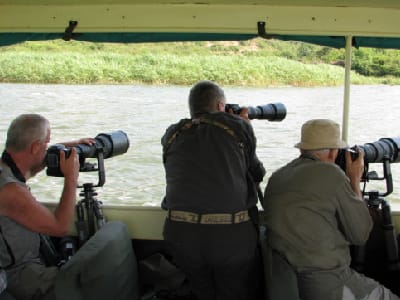
Kenya is a photographer’s dream, from the lions, rhinos, elephants, and giraffes you’re likely to see to the colorfully dressed tribes of the Masai Mara, You don‘t want to get substandard photos or miss that epic shot because your battery has died or you spook the wildlife.Here are some simple tips to get you started:
- Before you go, buy a good camera, learn how to use it, and make sure it's charged before you venture out.
- Carry some extra batteries as it's likely you’ll use the camera more than you might anticipate. (Just remember to charge those too.)
- Carry extra SD cards and storage so you can take as many photos as you like.
- If you are out at night, don't use flash – that’s a sure-fire way to scare animals off.
- Embrace the light and use it to your advantage. Photos are best taken in the early morning or late afternoon. Everyone wants that amazing sunrise/sunset shot of Africa, right? Plus, animals tend to be more active at dawn or dusk.
- Be patient. The animals are doing their own thing and aren't there to pose for the safari tours. Spend time observing the animals to understand and appreciate their behavior.
- Don't just take photos of the animals. Africa is sensory overload so look for details like animal tracks – the landscapes themselves are pretty spectacular, too.
- Don’t view the whole trip through your viewfinder – remember to put the camera down and simply experience the wonders of Africa.
Top safari spots in Kenya
Every safari destination in Kenya offers a distinct experience that is sure to be memorable.Masai Mara
Kenya is the end point for the famed Great Migration – an event of such epic proportions that it has cemented its place in David Attenborough documentaries.
Each year, at least 2 million wildebeest are joined by zebras, gazelles and other antelope species to migrate from the Ngorongoro Crater in Tanzania, crossing rivers along the way to the rich grasslands in the Masai Mara National Park in Kenya. In hot pursuit are the predators like lions, crocodiles, hyena, and wild dogs taking advantage of the abundant food which gives any safari seeker an opportunity to see a kill in action.
Best time to visit: Wildlife can be seen all year around but June to October is generally the best. If you want to catch the height of the Great Migration, visit during September-October.
Tsavo National Park
The largest protected area in Kenya, Tsavo is home to the big animals like hippos, rhinos, giraffe, elephants, lions, and prolific bird life such as secretary birds, hornbills, ostrich, hoopoe and many more.
Best time to visit: During the drier months – January-February along with July to October.
Amboseli National Park
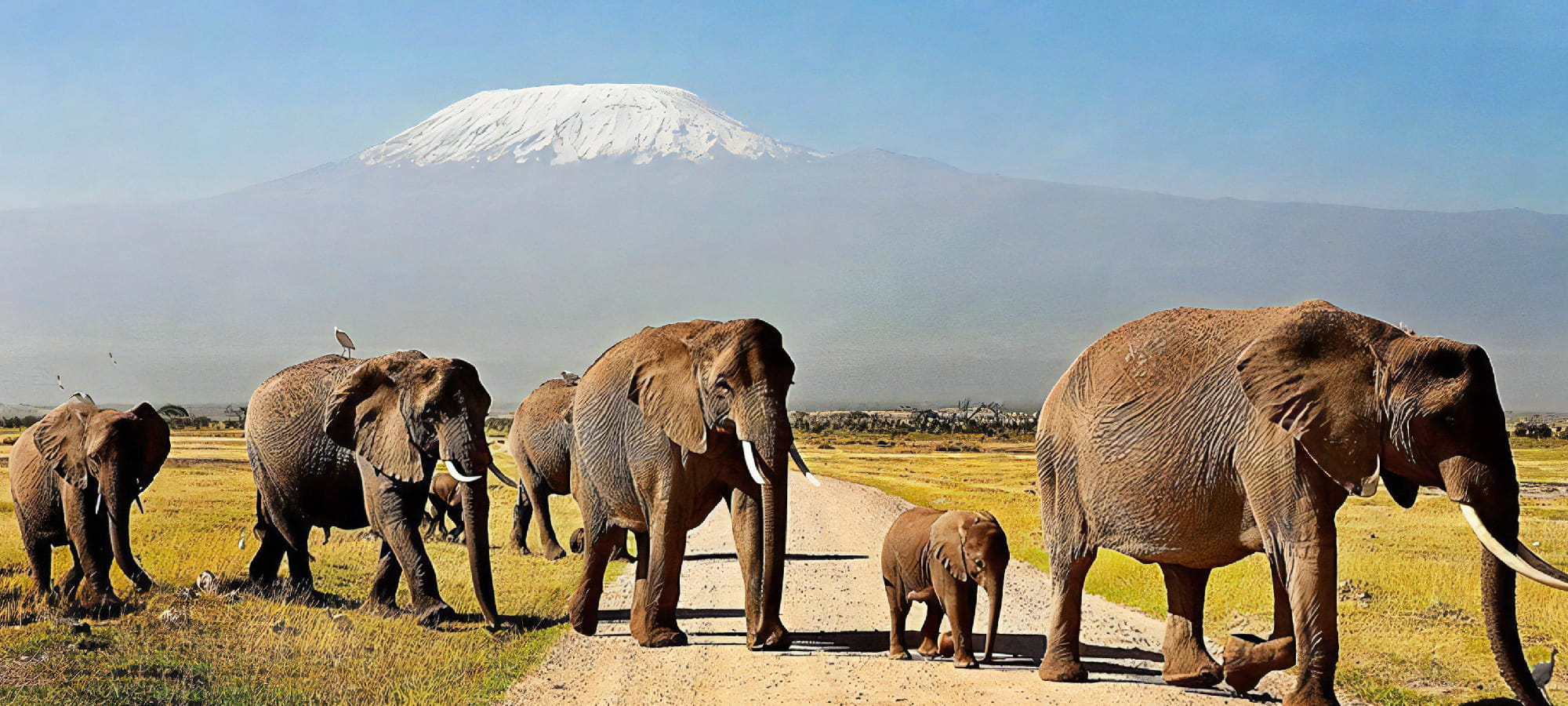
The second most-visited park after Masai Mara, this is where you can get those magnificent shots of Mount Kilimanjaro with elephants hanging out in the foreground. Four of the Big 5 live here (sorry, no rhinos) and if you love those grey giants (elephants) this is the place to see them.
Best time visit: January-February and June to September.
Tip: If you want that spectacular Kilimanjaro/animal photo, it's best taken in the early morning.
Lake Nakuru National Park
A UNESCO World Heritage Site, this alkaline lake is famous for its vast flocks of flamingos. Tens of thousands of these flamboyant pink birds call the lake home.
This is also the place to see black and white rhinos, the endangered Rothschild giraffe, hippos wallowing in the water, and predators like lions and leopards.
Best time to visit: July-February.
Safety while camping on safari
One of the true great experiences of being on a safari is sleeping under the stars. Falling asleep to the roar of a lion, the chattering of hyena or the grunt of a hippo is unforgettable.But along with the joys there are risks. Here are the rules to follow:
- Go with a reputable, responsible tour operator.
- Zip up your tent (animals won't walk into your tent if it's secure).
- Don‘t walk around at night. If you need to leave your tent, be sure to go with an escort.
- Don‘t take food to your tent or leave anything outside your tent that will attract interest from animals.
If you think these rules are a bit extreme, wait until you see the footprints around your camp the next morning.